📋 Summary
- Cataler Corporation is a Japanese catalytic converter and exhaust emissions catalyst manufacturer, founded in 1967 specifically to develop exhaust-gas purification catalyst technology before it existed in Japan, and renamed Cataler in 1998
- The company is headquartered in Kakegawa City, Shizuoka Prefecture, and Toyota Motor Corporation holds a 56.51% stake, according to Toyota’s own regulatory filings, making Cataler a genuine Toyota Group member with majority Toyota ownership
- Cataler developed the world’s first “High Ceria Catalyst,” a three-way monolith catalyst technology, and is described as a core catalyst supplier entrusted by Toyota specifically for research and development
- Cataler is genuinely distinct from the aftermarket exhaust brands covered elsewhere in this series (Fujitsubo, Apexi, Tomei Powered), which make performance exhaust systems rather than the emissions-control catalyst technology that’s Cataler’s specific focus
The catalytic converter is one of the most genuinely important, least understood components in any modern JDM vehicle, and Cataler is a major, majority Toyota-owned specialist behind exactly this emissions-control technology.
Founded Specifically to Pioneer Catalyst Technology in Japan
Cataler Corporation was founded in 1967, established specifically to develop exhaust-gas purification catalyst technology at a time when this technology didn’t yet exist within Japan, according to the company’s own corporate history. The company was renamed Cataler in 1998, and is headquartered in Kakegawa City, Shizuoka Prefecture. Toyota Motor Corporation holds a 56.51% stake in Cataler, according to Toyota’s own regulatory filings, making the company a genuine Toyota Group member with clear majority Toyota ownership, a meaningfully different corporate structure from some of the more loosely Toyota-affiliated companies covered elsewhere in this series.
💡 Tip: Cataler Is Toyota’s Trusted Catalyst R&D Partner
According to available descriptions of the company’s role, Cataler operates as a core catalyst supplier specifically entrusted by Toyota Motor Corporation for research and development, a genuinely significant position within Toyota’s broader emissions-control technology strategy, rather than a purely arm’s-length parts supplier.
A Genuine Technical Pioneer: The World’s First High Ceria Catalyst
Cataler developed the world’s first “High Ceria Catalyst,” a three-way monolith catalyst technology, according to the company’s own materials, a genuinely significant engineering achievement within automotive emissions control. Three-way catalysts work by simultaneously converting three harmful exhaust gas components, carbon monoxide, unburned hydrocarbons, and nitrogen oxides, into less harmful substances, and cerium-based catalyst formulations like Cataler’s have become an important part of how modern catalytic converters achieve this conversion efficiently.
What’s Actually Inside the Honeycomb: A Closer Look at Ceria’s Role
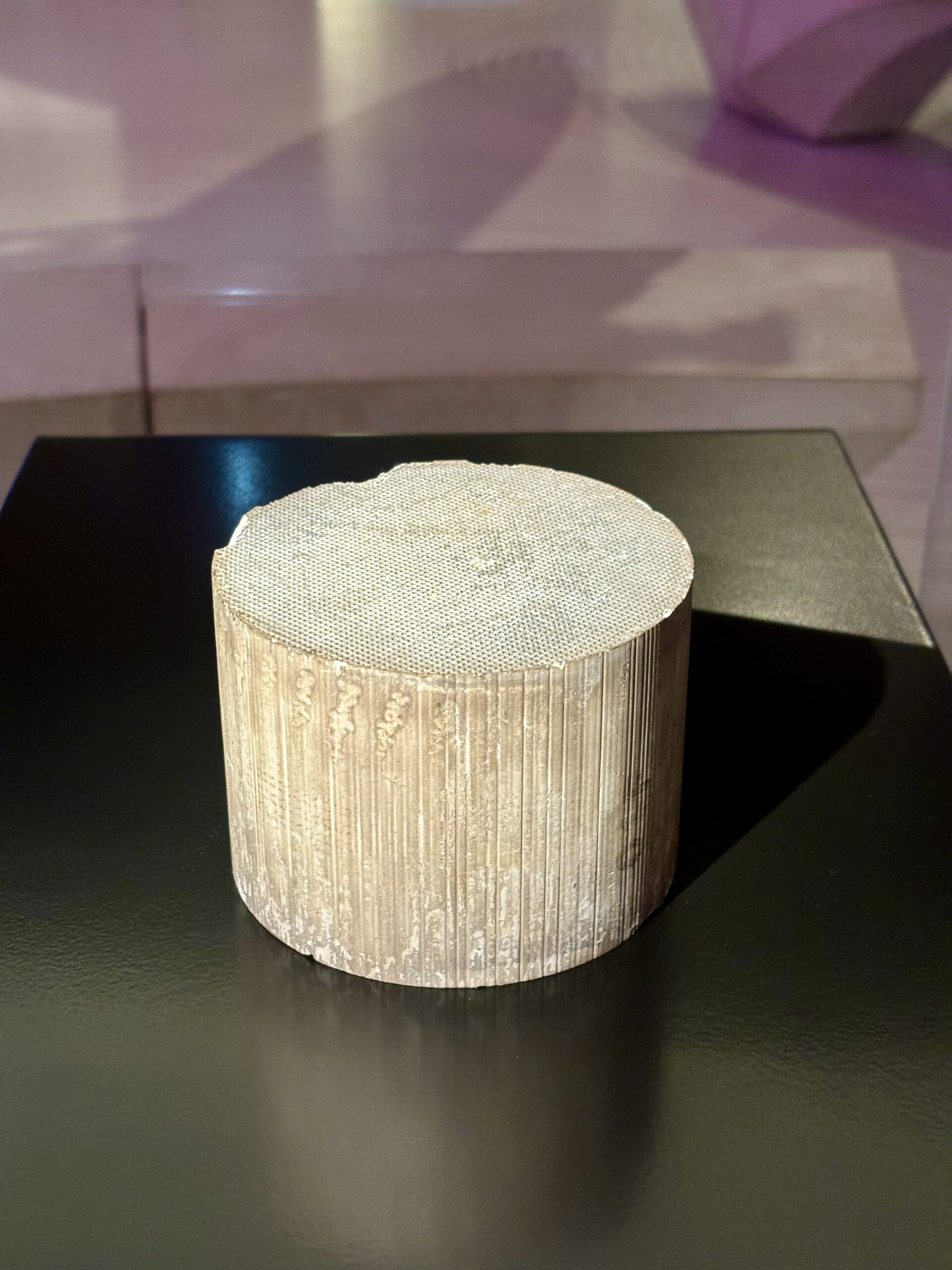
It’s genuinely worth understanding what Cataler’s ceria-based technology is actually doing inside a catalytic converter’s honeycomb-shaped ceramic monolith. That monolith is coated with a washcoat containing cerium oxide, ceria, along with platinum-group metals including platinum, palladium, and rhodium. Ceria’s specific job is genuinely clever: it stores oxygen when exhaust gas runs slightly lean, then releases that stored oxygen when the mixture briefly runs rich, buffering the catalyst against the constantly fluctuating air-fuel mixture an engine actually produces moment to moment, and keeping the three-way conversion reaction working efficiently even during these transients rather than only under perfectly steady conditions. Because cerium and the platinum-group metals inside a catalytic converter are classified as critical raw materials, largely because of limited global rare-earth supply, a spent catalytic converter genuinely retains real recoverable value, part of why catalytic converter theft has become a documented problem in many regions, and why properly recycling rather than discarding an old converter is worth pursuing.
Why This Is Genuinely Different From Aftermarket Exhaust Brands
It’s worth being precise about how Cataler differs from Fujitsubo, Apexi, and Tomei Powered, covered in a separate article in this series: those companies manufacture aftermarket performance exhaust systems, focused on sound, flow, and styling for JDM tuning applications. Cataler’s business is entirely different, emissions-control catalyst technology that’s a mandatory, regulated component of any road-legal vehicle’s exhaust system, not an aftermarket upgrade category at all. Understanding this distinction matters if you’re researching catalytic converter replacement for emissions compliance reasons, a genuinely different concern from aftermarket exhaust performance.
⚠️ Caution: Catalytic Converter Replacement Is Legally Regulated
Catalytic converters are subject to emissions regulations in most jurisdictions, and removing, bypassing, or replacing one with a non-compliant part is genuinely illegal in many places, separate from any performance consideration. Always confirm your local emissions regulations and use a properly certified replacement catalytic converter if service is needed, rather than assuming any aftermarket part is legally compliant.
Frequently Asked Questions
Q: Is Cataler owned by Toyota?
A: Toyota Motor Corporation holds a 56.51% stake, according to Toyota’s own regulatory filings, making Cataler a majority Toyota-owned Group member.
Q: What does Cataler make?
A: Catalytic converter and exhaust emissions catalyst technology, including the world’s first “High Ceria Catalyst” three-way monolith catalyst.
Q: Is Cataler the same as Fujitsubo, Apexi, or Tomei Powered?
A: No, those companies make aftermarket performance exhaust systems, while Cataler focuses specifically on emissions-control catalyst technology, an entirely different, regulated component category.
Q: When was Cataler founded?
A: 1967, established specifically to develop exhaust-gas purification catalyst technology in Japan, before being renamed Cataler in 1998.
This article is for general informational purposes based on publicly available company and regulatory filing sources. Emissions regulations vary by jurisdiction and change over time – always verify current local requirements and use properly certified replacement parts for catalytic converter service.
Image credit: Catalytic Converter Interior by Cyrogigabyte, CC0, via Wikimedia Commons
コメント