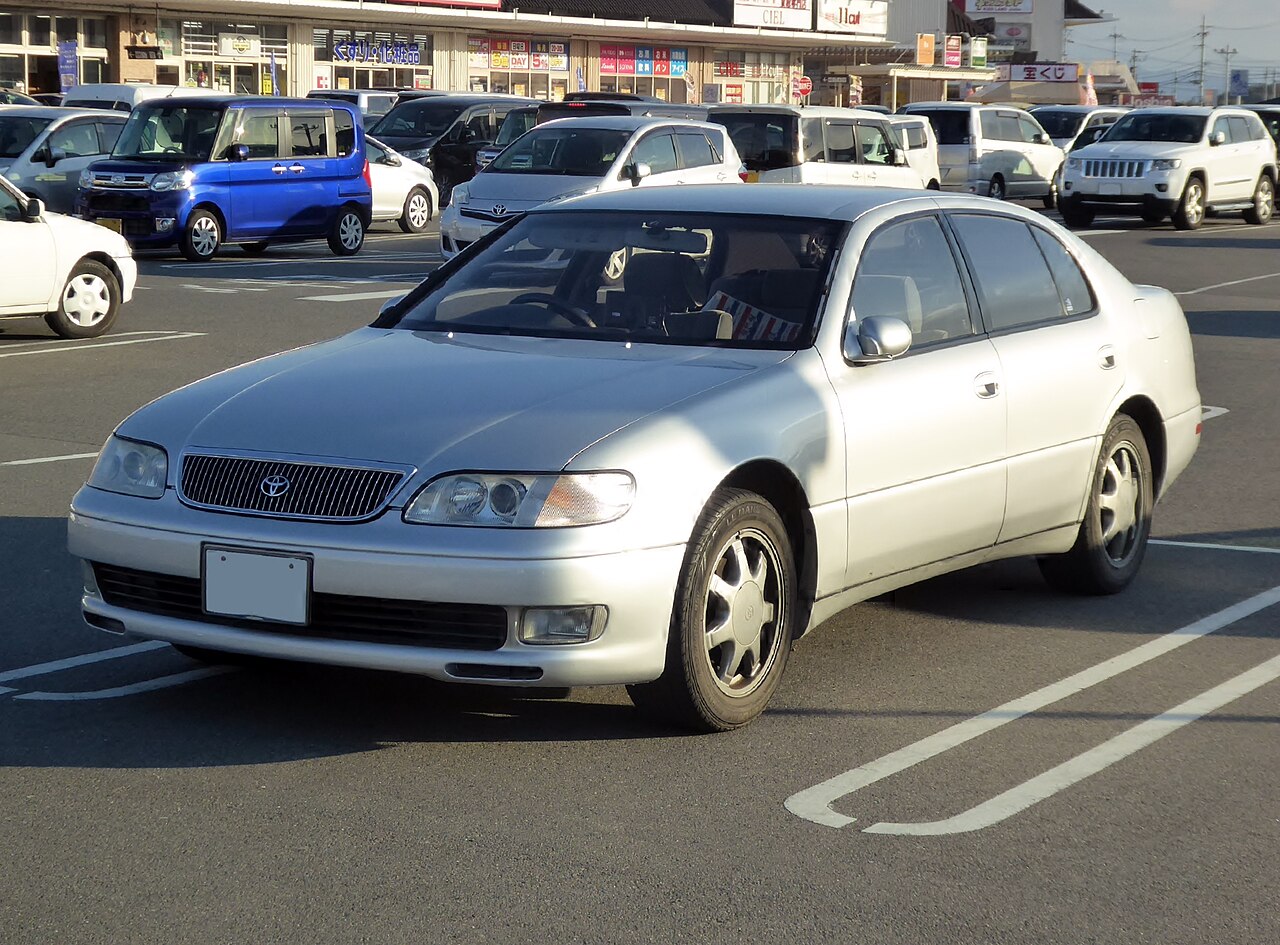
The Toyota Aristo and the Lexus GS300/GS400 share the same platform and bodyshell — identical panels and chassis underneath different badges, grilles, and trim details. But one crucial thing separated the JDM Aristo from its export Lexus twin: the range-topping Aristo V300, built on both the JZS147 and JZS161 generations, ran the 2JZ-GTE twin-turbo inline-six — the exact same engine found in the A80 Toyota Supra RZ. That engine was never offered in any export-market Lexus GS, which got the naturally aspirated 2JZ-GE instead, and, on the JZS161 generation, the option of a 1UZ-FE V8 badged as the GS400. This guide covers why confirming the correct engine matters enormously, the specific turbo failure symptom to listen for, and the age-related issues common to a luxury sedan now in its third decade.
📋 What You’ll Learn in This Guide
- Why the Aristo and Lexus GS are the same car with one crucial exception
- Why confirming the engine code is the most important thing you can do
- The specific turbo whine symptom that signals expensive trouble
- Why the JZS161 is generally the stronger daily-driver choice
- What luxury-car electronics failures to budget for
Same Car, Different Badge — Except for the Engine
At the panel and chassis level, the JDM Aristo and the export Lexus GS are genuinely the same car, distinguished mainly by badging, grille design, and trim specifics. The meaningful exception is the engine bay: the Aristo V300 came exclusively with the 2JZ-GTE twin-turbo inline-six shared with the A80 Supra RZ, an engine Toyota never offered in any export-market Lexus GS. Export buyers instead got the naturally aspirated 2JZ-GE, and later, on the JZS161 generation, the option of a 1UZ-FE 4.0-liter V8 under the Lexus GS400 badge. If you’re specifically chasing Supra-derived performance in a sedan body, the JDM Aristo V300 is the only way to get it factory-original.
Confirming the Engine Is Non-Negotiable
Because the twin-turbo 2JZ-GTE and naturally aspirated 2JZ-GE look broadly similar at a glance to an unfamiliar buyer, verifying which engine is actually under the hood — and whether it’s the original factory unit — is the single most important step before committing to an Aristo purchase. Don’t rely on trim badging alone; cross-reference the engine code directly and ask for documentation confirming originality, since the performance and value gap between the two engines is substantial.
💡 Tip
The JZS161 generation is generally the stronger choice for daily use, since it gained VVT-i variable valve timing refinements that the earlier JZS147 cars lack. If you’re weighing the two generations purely on drivability and refinement rather than chasing the earliest possible example, the JZS161 is worth prioritizing.
The Turbo Whine That Signals Trouble
On twin-turbo V300 examples, listen carefully for a whine that begins around 4,000 rpm but doesn’t translate into smooth, corresponding boost build — this is the classic symptom of secondary turbo failure on this platform. If you hear it during a test drive, treat it as a reason to walk away rather than negotiate around it; the rebuild cost for this specific failure is significant, and it’s not something worth absorbing as a bargaining chip unless the price already reflects a full turbo rebuild.
Age-Related Issues Across Both Generations
As with any car now approaching or past three decades old, rubber components throughout the car are generally at or near end-of-life, and rear subframe mount rust is a specifically known failure mode worth inspecting directly rather than assuming away. Because the Aristo was a genuinely loaded luxury sedan in its day, it carries extensive electronics — and over the decades, a meaningful share of that equipment has failed on surviving examples. Test every electronic feature you can during an inspection rather than assuming a clean-looking interior means everything still functions.
⚠️ Caution
Choosing a reliable Aristo comes down to three specific things: verified engine maintenance history, confirmed presence of the genuine twin-turbo 2JZ-GTE rather than the naturally aspirated 2JZ-GE if that’s what you’re paying for, and clean, documented ownership records. Skipping any one of these significantly raises your risk of an expensive surprise after purchase.
What Drives Pricing Today?
Verified, original V300 examples with the twin-turbo 2JZ-GTE and documented maintenance command a clear premium over naturally aspirated Aristo variants, reflecting both the engine’s inherent desirability and its direct connection to the A80 Supra. JZS161 examples with functioning electronics and rust-free subframes generally command more buyer confidence than earlier JZS147 cars, given the added VVT-i refinement and generally later production dates.
Frequently Asked Questions
Q: Is the Aristo V300 genuinely equivalent to buying a Supra?
A: It shares the same 2JZ-GTE engine, but the Aristo is a heavier, more luxury-oriented sedan rather than a purpose-built sports coupe — think of it as offering related engine character in a very different vehicle, not a direct Supra substitute.
Q: Is a naturally aspirated Aristo still worth considering?
A: Yes, if you prioritize simpler long-term maintenance over outright performance — the 2JZ-GE is a fundamentally sound engine without the twin-turbo system’s specific failure risks, and it’s a reasonable choice for buyers who want Aristo styling and comfort without the V300’s maintenance complexity.
Final Thoughts
The Aristo’s status as the sedan Lexus never let export buyers have — thanks to its exclusive access to the 2JZ-GTE — gives it genuine appeal beyond simple badge-engineering curiosity. Confirm the engine code and its originality above everything else, listen carefully for the specific secondary turbo whine on V300 examples, and budget realistically for age-related rubber and electronics issues. Get that right, and the Aristo remains one of the more genuinely interesting ways to experience Supra-derived engineering in a full-size luxury sedan.
Image credit: Toyota Aristo 3.0V (JZS147), via Wikimedia Commons (CC BY-SA)
_front.jpg)
コメント