Japan’s relationship with Formula 1 stretches back to 1964, when Honda became the first Japanese constructor to enter the sport — a relationship that would eventually produce genuine world championship dominance as an engine supplier, some of the most controversial and consequential moments in F1 history at Suzuka, and a steady stream of Japanese drivers reaching the sport’s highest level. This guide traces that complete arc, distinct from the specific circuit engineering covered in this series’ Fuji Speedway and Suzuka Circuit guide.
📋 What You’ll Learn in This Guide
- Honda’s genuine landmark debut as Japan’s first F1 constructor
- Honda’s dominant late-1980s turbo engine supplier era with McLaren
- The controversial 1989 and 1990 Senna-Prost championship-deciding collisions at Suzuka
- The first Japanese drivers to compete in Formula 1
- Why Japan’s F1 story extends well beyond any single team or driver
- Honda’s Landmark 1964 Debut
- Honda’s Dominant Turbo Engine Supplier Era
- The 1989 Suzuka Collision: Controversy and Disqualification
- The 1990 Suzuka Collision: A Deliberate Rematch
- The First Japanese Drivers in Formula 1
- Japan’s F1 Story Extends Well Beyond Any Single Team
- Why Suzuka Became Such a Fateful Championship Venue
- Honda’s Broader Legacy in Japanese Motorsport Identity
- Frequently Asked Questions
- Final Thoughts
Honda’s Landmark 1964 Debut
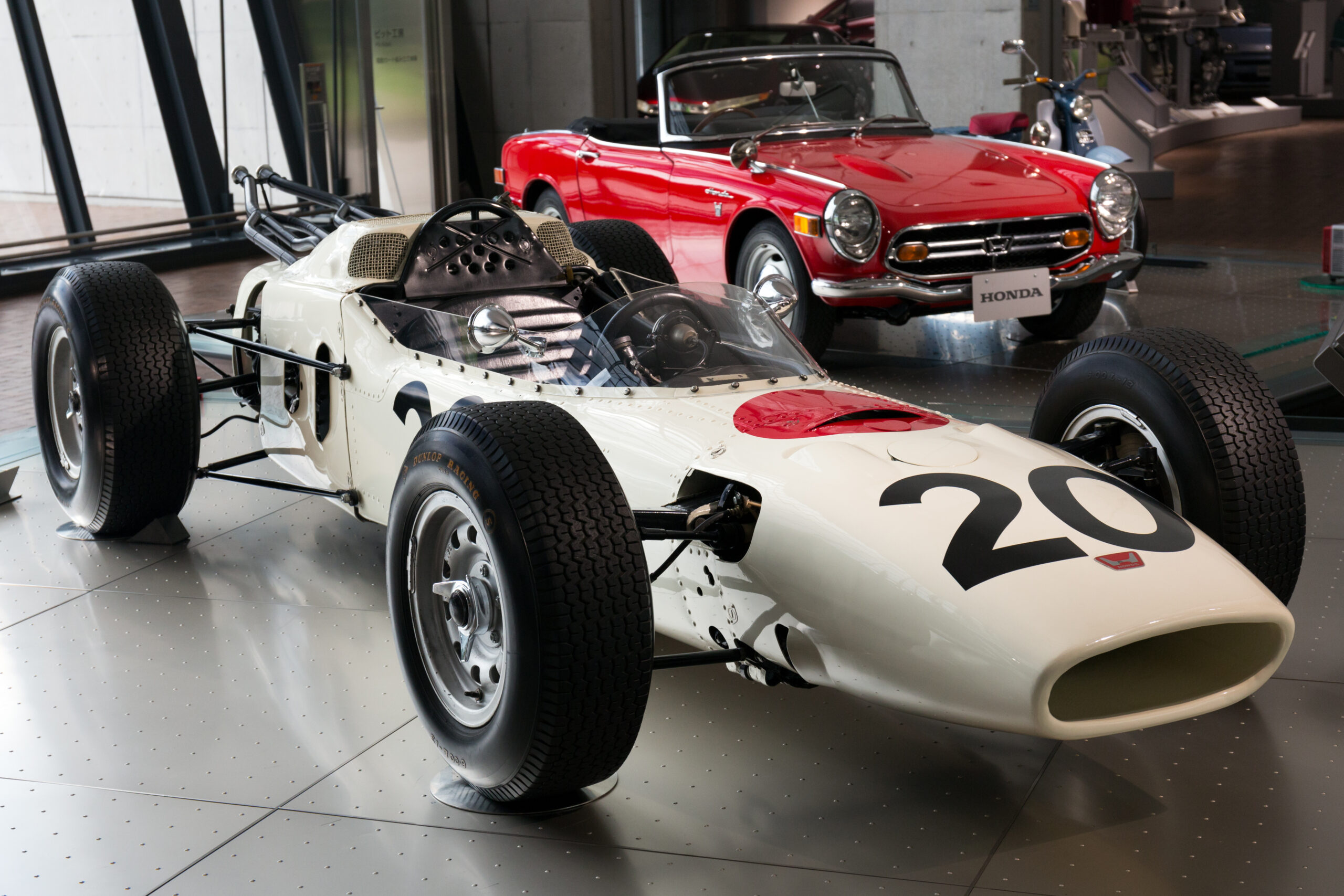
Honda became the first Japanese manufacturer to enter Formula 1 as a constructor, debuting at the 1964 German Grand Prix with driver Ronnie Bucknum piloting the Honda RA271 — a car powered by a genuinely ambitious 1.5-liter V12 engine — to a 13th-place finish. This wasn’t a token or symbolic entry; Honda’s early F1 program represented genuine, serious engineering commitment to competing at the sport’s highest level, establishing Japan’s F1 presence well over a decade before Japan would even host its first Grand Prix, and setting a precedent for Japanese manufacturer involvement in F1 that would eventually produce far greater success in the decades that followed.
Honda’s Dominant Turbo Engine Supplier Era
Honda’s most genuinely dominant F1 era came not as a full constructor but as an engine supplier during the 1980s turbo period, powering Williams from 1984 to 1987, Lotus from 1987 to 1988, and McLaren from 1988 to 1992 — a run that produced six constructors’ championships and established Honda as arguably the single most successful engine manufacturer of the entire turbocharged era. The pairing with McLaren specifically produced genuinely historic results: in 1988, the McLaren-Honda combination with the turbocharged RA168-E V6 won 15 of 16 races that season, with Ayrton Senna claiming the drivers’ championship and McLaren the constructors’ title in a display of dominance rarely matched before or since in F1 history.
💡 Tip
If you’re specifically researching Honda’s F1 engine supplier history, understand that this dominant McLaren partnership produced back-to-back-to-back drivers’ championships across 1988, 1989, and 1990, with Senna and teammate Alain Prost forming one of the most competitive and eventually contentious teammate rivalries in F1 history — a genuine dynasty built on Honda’s engine performance combined with McLaren’s chassis engineering and two of the era’s most talented drivers racing each other as intensely as they raced everyone else.
The 1989 Suzuka Collision: Controversy and Disqualification
The Senna-Prost rivalry reached a genuinely explosive breaking point at the 1989 Japanese Grand Prix at Suzuka, where Senna attempted to pass his McLaren teammate Prost at the circuit’s chicane, only for Prost to turn into Senna’s car, eliminating both drivers from the race and, in the process, denying Senna the championship that year. The controversy didn’t end with the collision itself: Senna received assistance from track marshals, rejoined the race by cutting through the chicane rather than following the full circuit, and went on to pass Alessandro Nannini for what initially appeared to be a dramatic victory — only to be disqualified afterward on the grounds that cutting the chicane meant he hadn’t completed the full, legitimate race distance. This disqualification handed Prost the 1989 world championship, cementing the incident as one of the most controversial and consequential moments in F1 history.
The 1990 Suzuka Collision: A Deliberate Rematch
The following year’s Japanese Grand Prix at Suzuka produced an even more directly controversial sequel: Senna deliberately rammed into Prost, by then driving for Ferrari, at the very first corner, eliminating both drivers and securing Senna the 1990 world championship in the process. Unlike the 1989 incident, Senna faced no penalty for this collision, drawing furious public criticism from FIA president Jean-Marie Balestre, who called it “a scandal that a world championship should be decided on such a collision.” Senna later openly admitted the collision was deliberate, explicitly citing the 1989 incident and stating that the two drivers were now “even” — a rare, genuinely candid admission that transformed what might have been dismissed as a racing incident into an acknowledged act of calculated retaliation.
⚠️ Caution
These two Suzuka incidents remain genuinely contested and debated among F1 historians and enthusiasts decades later, with reasonable people continuing to disagree about the appropriate degree of blame each driver bears for each specific collision. Treat any account of these events, including this one, as summarizing well-documented historical facts and widely reported context rather than settling the genuine, ongoing debate about moral culpability that continues among serious F1 historians to this day.
The First Japanese Drivers in Formula 1
Japan’s own driver representation in F1 began at the 1976 Japanese Grand Prix at Fuji Speedway, when Masahiro Hasemi, Noritake Takahara, and Kazuyoshi Hoshino became the first Japanese drivers to start a Formula 1 Grand Prix, competing in what was also the dramatic season-deciding final race between James Hunt and Niki Lauda that year. While none of these initial Japanese drivers achieved major individual race results in their limited F1 appearances, their participation established Japan’s driver representation in the sport, a lineage that would continue through subsequent decades with drivers like Kamui Kobayashi, Takuma Sato, and more recently Yuki Tsunoda continuing to represent Japan at F1’s highest level.
Japan’s F1 Story Extends Well Beyond Any Single Team
While Honda’s engine supplier dominance and the Senna-Prost Suzuka controversies represent the most internationally famous chapters, Japan’s broader F1 involvement includes sustained manufacturer commitment across multiple eras (including Honda’s later returns to F1 both as a full constructor and subsequent engine supplier partnerships), a consistent, if numerically modest, lineage of Japanese drivers, and the host country role Japan has played across both the Suzuka and Fuji circuits covered in detail elsewhere in this guide series. Understanding this fuller picture, rather than focusing purely on the most dramatic individual moments, gives a more complete sense of just how substantively and continuously Japan has been woven into F1’s broader history since 1964.
Why Suzuka Became Such a Fateful Championship Venue
It’s worth noting the genuine irony in how consistently Suzuka specifically became the setting for F1’s most dramatic season-deciding moments during this era, given that the circuit’s scheduling as Japan’s Grand Prix venue placed it near the end of the F1 calendar in these particular seasons — a scheduling circumstance rather than any inherent property of the circuit itself that made it the recurring stage for championship-deciding drama. This scheduling pattern meant that when title fights remained genuinely close heading into the season’s final rounds, Suzuka frequently ended up hosting the decisive moment, a pattern that happened to coincide with the Senna-Prost era specifically but reflects calendar structure as much as anything unique about the circuit’s actual racing characteristics.
Honda’s Broader Legacy in Japanese Motorsport Identity
Honda’s F1 success during this era carries genuine significance for Japan’s broader motorsport identity and manufacturer credibility that extends well beyond F1 itself, reinforcing the same kind of international engineering credibility that models like the Honda NSX and Integra Type R covered elsewhere in this guide series drew on in establishing their own performance reputations. A manufacturer capable of producing genuinely dominant Formula 1 engines earned a different tier of engineering credibility than one competing purely in domestic or regional racing categories, and this F1-derived credibility meaningfully shaped how Honda’s road-going performance models were perceived by enthusiasts internationally during this same period.
Frequently Asked Questions
Q: Did Honda’s F1 involvement continue after the dominant McLaren partnership ended?
A: Yes — Honda has returned to Formula 1 in various capacities across subsequent decades, including periods as a full constructor and later engine supplier partnerships, reflecting sustained, if not perfectly continuous, manufacturer commitment to the sport well beyond the specific 1980s-1990s turbo era covered in detail in this guide.
Q: Is the 1989 Suzuka disqualification still considered controversial by F1 historians today?
A: Yes, genuinely — the specific circumstances (the collision itself, Senna’s assistance from marshals, and the disqualification rationale) remain a subject of legitimate historical debate and analysis, making it one of the more enduringly discussed controversies in F1 history rather than a settled matter with clear consensus.
Q: How many Japanese drivers have competed in Formula 1 since the sport’s first Japanese entrants in 1976?
A: A modest but genuine, ongoing lineage of Japanese drivers has competed in F1 across the decades since 1976, though exact figures and the specific list of drivers changes as new Japanese talent continues entering the sport, making any specific count worth verifying against current, up-to-date records rather than treating it as fixed.
Final Thoughts
Japan’s Formula 1 history spans from Honda’s genuinely pioneering 1964 constructor debut through a dominant 1980s engine-supplier dynasty, two of the sport’s most controversial and consequential championship-deciding moments at Suzuka, and a continuing lineage of Japanese drivers reaching motorsport’s highest level. Understanding this full arc, distinct from the specific circuit engineering and current racing calendar covered elsewhere in this guide series, gives real appreciation for just how substantively Japan has shaped Formula 1’s broader history over more than six decades.
Image credit: Honda RA271, Japan’s first Formula 1 car, at the Honda Collection Hall by Morio (CC BY-SA 3.0), via Wikimedia Commons

コメント